Case Study



About Project
The Challenge
Crypto wallets are powerful but hostile. A typical transfer asks a user to paste a string like 0x4f3a…e91b, trust that it's correct, accept a fee they don't understand, and confirm an action that can't be undone. For anyone outside the crypto-native bubble, that's a wall — and even experienced users make costly, irreversible mistakes.
Stan came to me with a working protocol but a product only existing degens could love. The brief was sharp: make Klip.AI legible and safe enough for a mainstream fintech user, without stripping the power that Web3 users expect.
My Role
I owned end-to-end product design UX architecture, the dark cinematic design system, hi-fi UI across the core flows, interaction and motion design, and the wallet's visual language working directly with the founder and engineering throughout.


About Project
Approach
I started by mapping the moments where users actually freeze or drop off in existing wallets: the address-paste step, the gas screen, and the post-transaction "…did that even work?" moment. From there I rebuilt the information hierarchy around one principle every screen should answer "what is happening, what will it cost, and can I trust it?" before asking the user to commit.
I moved from flows → low-fi structure → hi-fi prototypes, pressure-testing the riskiest moments (sending, swapping, chain-switching) first.
The Solution
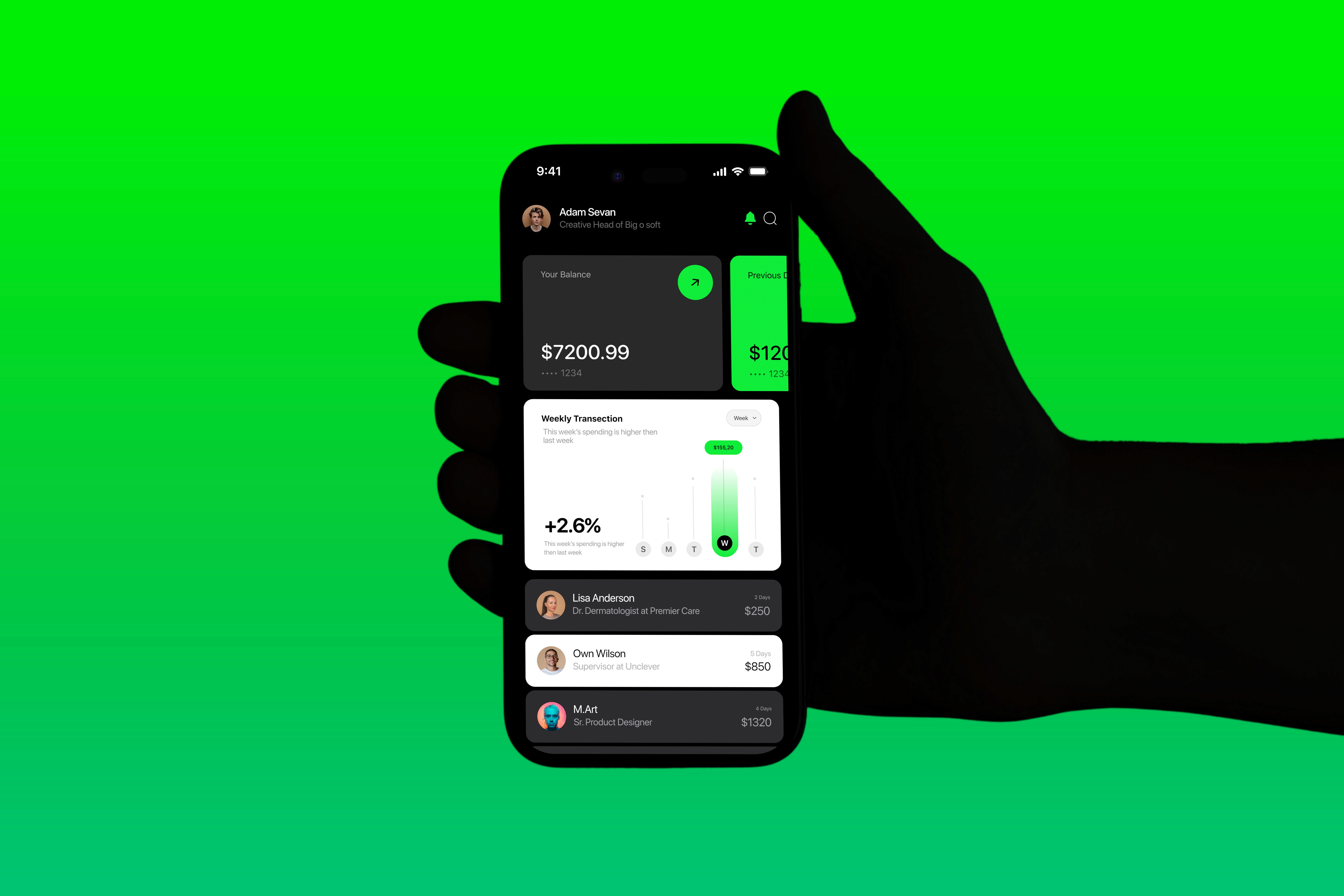
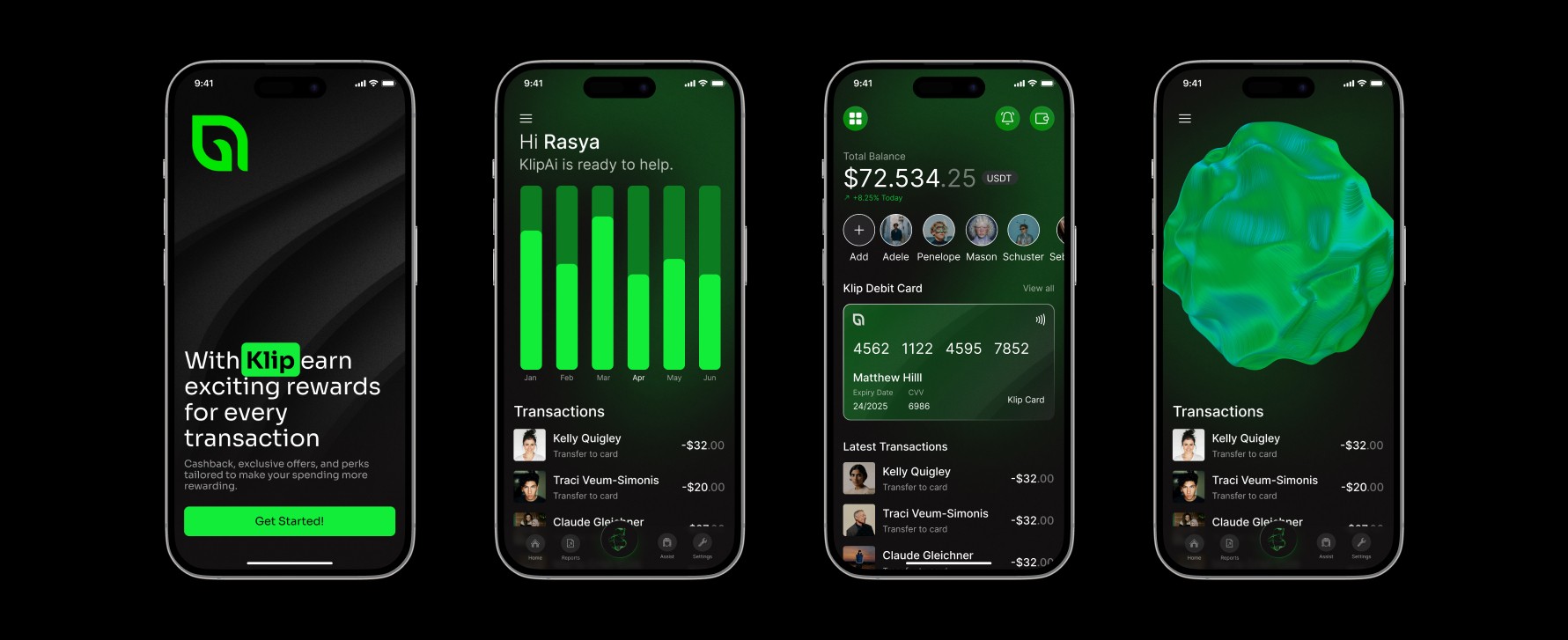
The result feels closer to a modern fintech app than a crypto tool: a clean dashboard, username-based sending, AI-generated receipts, spending insights, and a unified cross-chain experience — held together by a scalable, token-based design system and motion that reinforces each action rather than decorating it.
0+
0+
Hours of research and design iterations
0%
0%
Wallet retention improvement within three months
0%
0%
Satisfaction rate among crypto wallet
0
0
Integrations with major crypto wallets